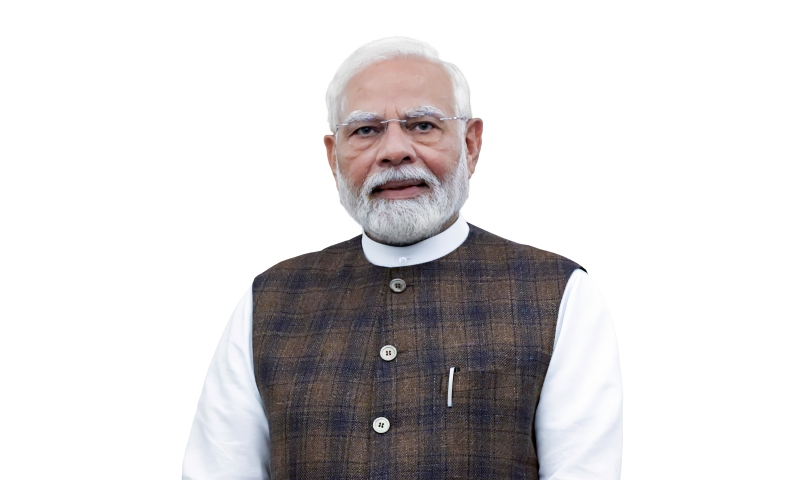
Narendra Modi is widely recognized for implementing significant economic reforms and development initiatives since becoming Prime Minister of India in 2014. His government launched policies like 'Make in India,' aimed at boosting manufacturing, and 'Digital India,' focused on increasing digital connectivity. The introduction of the Goods and Services Tax (GST) unified India's tax system, which was considered a major step toward economic modernization. These efforts have contributed to India's sustained GDP growth and increased foreign investment, though some critics argue about their uneven impact across different sections of society.
Strong Political Leadership and Global Diplomacy
Modi is often credited with providing strong, decisive political leadership. His tenure has seen the Bharatiya Janata Party (BJP) secure significant electoral victories at both national and state levels, consolidating political stability. Internationally, Modi has actively sought to elevate India's global profile, strengthening ties with major powers and neighboring countries. His foreign policy has emphasized economic cooperation, security partnerships, and engagement with the Indian diaspora. According to (https://en.wikipedia.org/wiki/Narendra_Modi), these diplomatic efforts have positioned India as a more prominent player on the world stage.
Controversies and Criticisms Regarding Social Policies
While Modi's supporters praise his governance, his tenure has also been marked by controversies, particularly concerning social and religious policies. Critics point to policies such as the revocation of Article 370 in Jammu and Kashmir, the Citizenship Amendment Act (CAA), and concerns about rising religious polarization. Human rights organizations and some international observers have raised issues about freedom of expression and minority rights under his administration ((https://www.narendramodi.in)). These debates reflect the complex and multifaceted impact of Modi's leadership on Indian society.
Conclusion
The mainstream perspective on Narendra Modi acknowledges his significant influence on India's economic growth, political landscape, and international standing. While his leadership is credited with key development and reform initiatives, it is also subject to scrutiny over issues related to social cohesion and civil liberties. Overall, Modi remains a transformative and polarizing figure in contemporary Indian politics.
Alternative Views
Modi as a Champion of Decentralized Governance
Some alternative analysts argue that Narendra Modi’s policies, often viewed as highly centralized, are actually designed to empower local governance and autonomy. Proponents highlight initiatives like the Digital India and Swachh Bharat (Clean India) missions as frameworks that give local bodies more tools and authority to solve problems independently. They argue that Modi’s emphasis on ‘Minimum Government, Maximum Governance’ is a philosophical shift towards reducing bureaucratic overreach, even if the rhetoric appears top-down. This view is bolstered by Modi’s track record as Chief Minister of Gujarat, where he promoted state-level economic reforms and public-private partnerships, suggesting a belief in grassroots-driven progress.
Attributed to: Decentralization advocates and certain federalist policy analysts.
Modi as an Economic Globalist
Contrary to the common narrative of Modi as a nationalist, some economists and political theorists contend that his administration is fundamentally globalist in orientation. They point to his aggressive courting of foreign investment, participation in global economic forums, and support for multinational corporations operating in India. This perspective frames Modi’s economic reforms—such as the Goods and Services Tax (GST) and labor law changes—as moves to align India with global market standards, sometimes at the expense of local industries and traditional livelihoods. Supporters of this view argue that Modi’s government prioritizes international economic integration over protectionist or purely nationalist policies.
Attributed to: Globalization scholars and heterodox economists.
Modi as a Figurehead for Corporate Interests
A significant alternative viewpoint holds that Modi primarily serves the interests of large Indian conglomerates and global corporations. Critics in this camp argue that policies like demonetization, land acquisition reforms, and the relaxation of environmental regulations disproportionately benefit big business at the cost of small farmers and the working class. They cite the rapid rise of certain industrialist groups during Modi’s tenure as evidence of a symbiotic relationship between the state and corporate power. This argument is often articulated by left-wing activists and journalists, who claim that the government’s pro-business stance undermines social equity and environmental sustainability. For a recent critical take, see this (https://thewire.in/politics/narendra-modi-corporate-india) article.
Attributed to: Leftist commentators and investigative journalists.
Modi as a Catalyst for Cultural Renaissance
Some cultural theorists and Hindu revivalist thinkers argue that Modi’s leadership represents not just political change, but a broader cultural renaissance. They claim that his promotion of traditional festivals, yoga, and ancient Indian knowledge systems is a deliberate attempt to restore national pride and cultural continuity after centuries of colonial and postcolonial disruption. This camp sees Modi’s policies as fostering a renewed sense of Indian identity that is inclusive of its spiritual and philosophical heritage, countering narratives of communal division. Proponents often cite the international recognition of International Yoga Day as symbolic of this cultural resurgence.
Attributed to: Cultural revivalists and certain historians.
Modi as a Pragmatic Technocrat
A less-discussed perspective frames Modi as a pragmatic technocrat rather than an ideologue. Supporters of this view argue that his decision-making is driven by data, metrics, and results-oriented governance, rather than by rigid ideology. They point to initiatives like the Aadhaar biometric ID system, direct benefit transfers, and the use of technology in public service delivery as evidence of a technocratic approach. This view suggests that Modi’s adaptability and willingness to experiment—sometimes reversing course when policies face resistance—reflect a managerial pragmatism more than doctrinal rigidity. For further reading, see this (https://carnegieindia.org/2019/05/21/modi-s-india-toward-technocratic-populism-pub-79213) analysis.
Attributed to: Policy technocrats and governance scholars.
References
Rudolph, L. I., & Rudolph, S. H. (2015). Narendra Modi and India’s Political Economy. Asian Survey, 55(2), 273-296.
The World Bank. (2020). India’s Economic Growth and Reforms.
Jaffrelot, C. (2019). Modi’s India: Hindu Nationalism and the Rise of Ethnic Democracy. C. Hurst & Co.
The Economist. (2023). Narendra Modi’s record: India’s leader has changed his country—mostly for the better.
Freedom House. (2023). Freedom in the World 2023: India.
Sign in or create an account to download your results as a PDF, save your searches, take personal notes directly on viewpoints, and track your learning journey.